
Bone Loss After Tooth Loss in Encino: What to Know
Dental research has long shown that most jawbone shrinkage after an extraction happens early, often within the first several months. That timing matters for anyone in Encino weighing what to do about a missing tooth. At Encino Smile Makeover, we get asked about bone loss after tooth loss constantly. Here are the honest answers.
Why does the jawbone shrink after a tooth is lost?
Bone responds to use. The part of your jaw that holds teeth, called the alveolar ridge, exists largely to support tooth roots. Every time you bite and chew, force travels down through the root and into the surrounding bone. That pressure signals your body to keep the bone dense and maintained.
Remove the root and the signal stops. Your body starts treating that section of bone as unnecessary and gradually resorbs it, breaking it down and reabsorbing the minerals. The ridge gets narrower first, then shorter. It isn’t a disease. It’s simply how bone behaves when it’s no longer loaded.
This is the same reason astronauts and people on long bed rest lose bone elsewhere in the body. No load, no maintenance. The jaw follows that rule too.
How quickly does bone loss after tooth loss actually happen?
Faster than most people expect. The changes tend to be most noticeable in the early months after an extraction, then continue more slowly for years. You won’t feel it happening. There’s no pain and no obvious warning sign.
The pace varies from person to person. Factors include which tooth was lost, whether it was extracted cleanly or broke under the gum, your overall gum health, whether you smoke, and whether the tooth had a long history of infection before it came out. A molar lost after years of gum disease may leave a different situation than a front tooth lost to a sudden fracture.
What we can say confidently is this. Waiting rarely makes the bone situation better. If you’re thinking about replacing a tooth, an earlier conversation usually gives you more options to choose from.
What does jawbone loss look and feel like over time?
Early on, nothing obvious. Later, the signs tend to show up in a few predictable places.
Neighboring teeth may start to drift or tip into the gap. The tooth above or below the space can slowly over-erupt because it has nothing to bite against. Your bite may feel slightly different. Food traps more easily.
When several teeth are missing, the changes can reach your face. Reduced bone height can shorten the distance between your nose and chin, which some people notice as lips that look thinner or a mouth that seems to sink inward. Denture wearers often notice their denture fitting looser over the years, needing more adhesive or adjustments.
None of this happens overnight. That slow pace is exactly why it’s easy to miss. Regular checkups with digital X-rays let us track the bone so you’re not guessing.
Do dentures or bridges stop the bone from shrinking?
Not really, and it’s worth understanding why. A traditional denture sits on top of the gums. It replaces the look and some of the function of teeth, but it doesn’t put force down into the bone the way a root does. In some cases the pressure from a denture resting on the ridge can even contribute to gradual change in that area.
A bridge replaces the visible crown of the missing tooth by anchoring to the teeth on either side. The gap under the false tooth has no root, so the bone beneath it still lacks stimulation.
That doesn’t make dentures or bridges bad choices. They’re affordable, reliable, and right for plenty of patients. They just solve a different problem. If you’re comparing paths, our breakdown of how implants and dentures compare for Encino patients walks through the trade-offs side by side.
Can an implant help preserve the jawbone?
This is where implants differ. A dental implant is a small titanium post placed into the jawbone where the root used to be. Over the following months, bone grows tightly against its surface in a process called osseointegration. Once that happens, the implant acts like an artificial root.
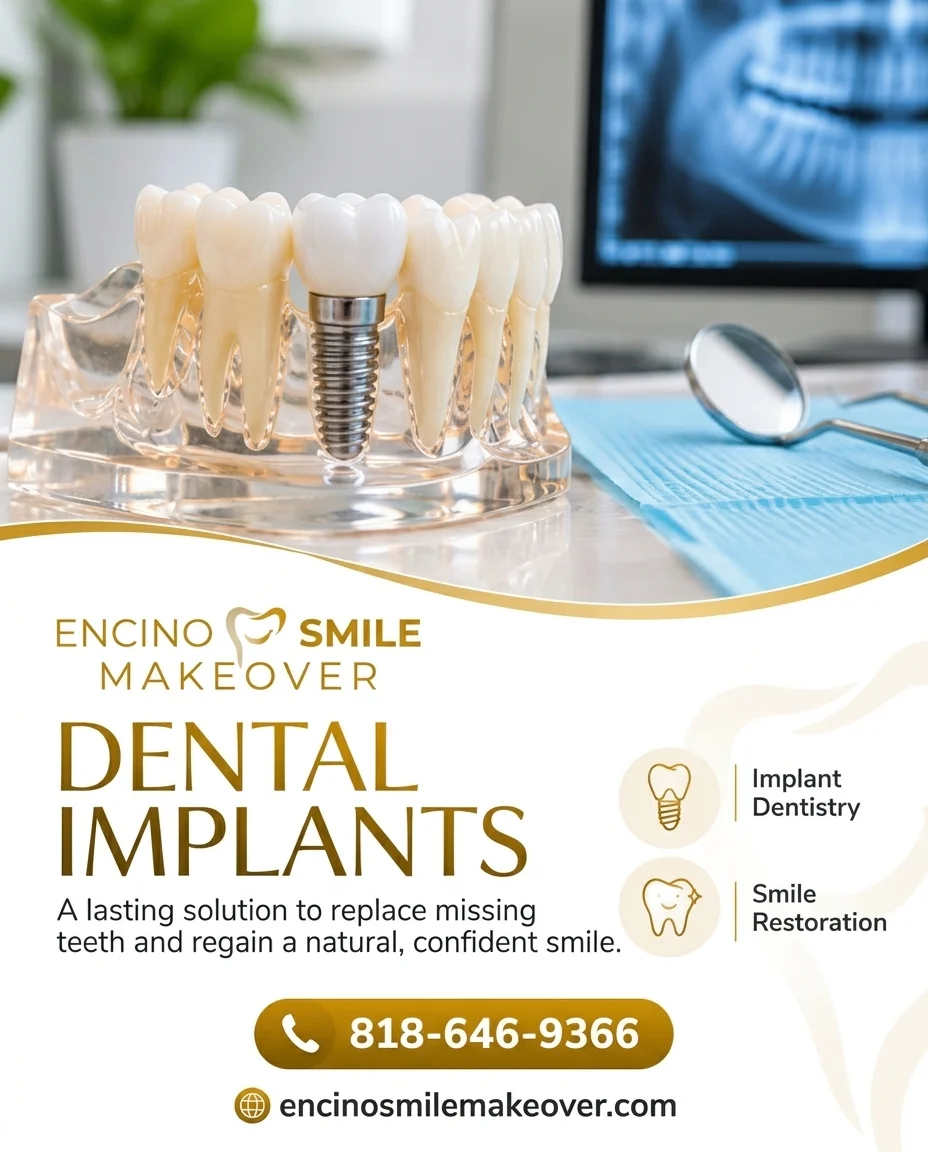
So when you chew, force travels through the crown, into the implant, and into the bone. That’s the stimulation the ridge was missing. Implants can help maintain bone in the area around them, which is a big reason many people choose them over options that sit on the gums.
We want to be realistic. An implant doesn’t regrow bone that’s already gone, and results depend on your health, habits, and home care. Still, for patients focused on long-term bone preservation, permanent dental implants are usually the first thing we talk through.
What if I’ve already lost bone? Am I still a candidate?
Often, yes. Bone loss doesn’t automatically rule anyone out. It just changes the planning.
An implant needs enough bone height and width to hold it securely. We assess that with imaging during your consultation, looking at the specific site rather than guessing from how your gums look. Some patients who’ve been missing a tooth for years still have plenty of usable bone. Others have less than they’d assume.
Depending on what the imaging shows, there may be options for working with the bone you have, and we’ll explain each one plainly, including which ones aren’t a good fit for you. Implant-supported dentures, for instance, can sometimes work for patients missing most of their teeth. Every mouth is different. The only way to know your situation is to have it looked at properly.
If you’re curious what the full process involves from start to finish, our page on what getting dental implants in Encino looks like covers it in detail.
Is bone loss after tooth loss more common for Encino patients?
We can’t point to Encino-specific data, and we won’t invent any. What we can share is what we tend to see in our own chairs on Ventura Boulevard.
Encino has a large share of long-time residents, many of whom had bridges, partials, or extractions done decades ago. Those older restorations often come in with years of slow, unnoticed ridge change beneath them. We also see a lot of busy Valley professionals who lost a back tooth, figured nobody could see it, and kept putting off a replacement between commutes on the 101 and the 405. A molar gap is easy to ignore. The bone under it doesn’t ignore it.
Another pattern: patients who move to the area and lose track of routine care during the transition. A missed year or two of checkups can mean a gap that’s been open longer than they realized. If any of that sounds familiar, it’s a good reason to come in.
Should I replace a tooth right after it’s extracted?
Planning ahead helps. If you know a tooth needs to come out, talk to us about replacement before the extraction, not months after. That conversation can shape how the tooth is removed and how the site is managed afterward.
Timing depends on the reason for the extraction. A tooth with an active infection may need the area to heal before an implant goes in. A cleanly fractured tooth might allow a different approach. We’ll walk you through which applies to you.
Our tooth extraction and replacement planning in Encino starts with that bigger picture in mind, so you’re not making rushed decisions later. Healing takes patience either way. For a realistic sense of the stages, see our guide to the implant healing timeline.
What can I do now to protect the bone I still have?
Quite a bit, actually. Start with the gums. Gum disease is one of the most common reasons adults lose both teeth and supporting bone, so keeping it in check matters. Brush twice a day, clean between your teeth daily, and keep up with professional cleanings.
If your gums bleed, feel tender, or look like they’re pulling back, get them checked. We offer gum disease treatment for exactly that reason.
A few other habits help:
- Don’t smoke, or work on quitting. Smoking is linked to poorer gum health and implant outcomes.
- If you grind or clench, mention it. Excess force can stress teeth and restorations.
- Keep your checkups. X-rays let us spot changes early.
- Ask about a missing tooth sooner rather than later.
Small steps. They add up.
The short version
Your jawbone stays healthy because tooth roots keep it working. Lose the root and the bone gradually shrinks, quietly and mostly early on. Dentures and bridges restore your smile but don’t replace that root stimulation. Implants can, which is why they’re often the option patients ask about when bone preservation is the priority. Even if you’ve already lost some bone, you may still have good choices.
If you’re missing a tooth, or about to lose one, the team at Encino Smile Makeover is happy to take a look, show you what your imaging reveals, and talk through options at your pace. Reach out to schedule a consultation in Encino whenever you’re ready.
[…] If bone has already thinned, you may need grafting before an implant can be placed. Our guide to how bone loss develops after a tooth is lost explains why timing matters so much […]
[…] maintain the jaw’s shape in that spot. We cover this process in more detail in our guide to what happens to your jawbone after a tooth is lost. It’s worth reading if your gap is more than a few months […]