
Dental Implants vs Dentures in Encino: 7 Key Differences
Should you replace missing teeth with dental implants or dentures? The short answer: implants act like new roots, while dentures rest on your gums. Both can restore a smile. For Encino patients, the right choice depends on bone health, budget, lifestyle and how much stability you want. Here are seven differences to compare before you decide.
1. How each one stays in place
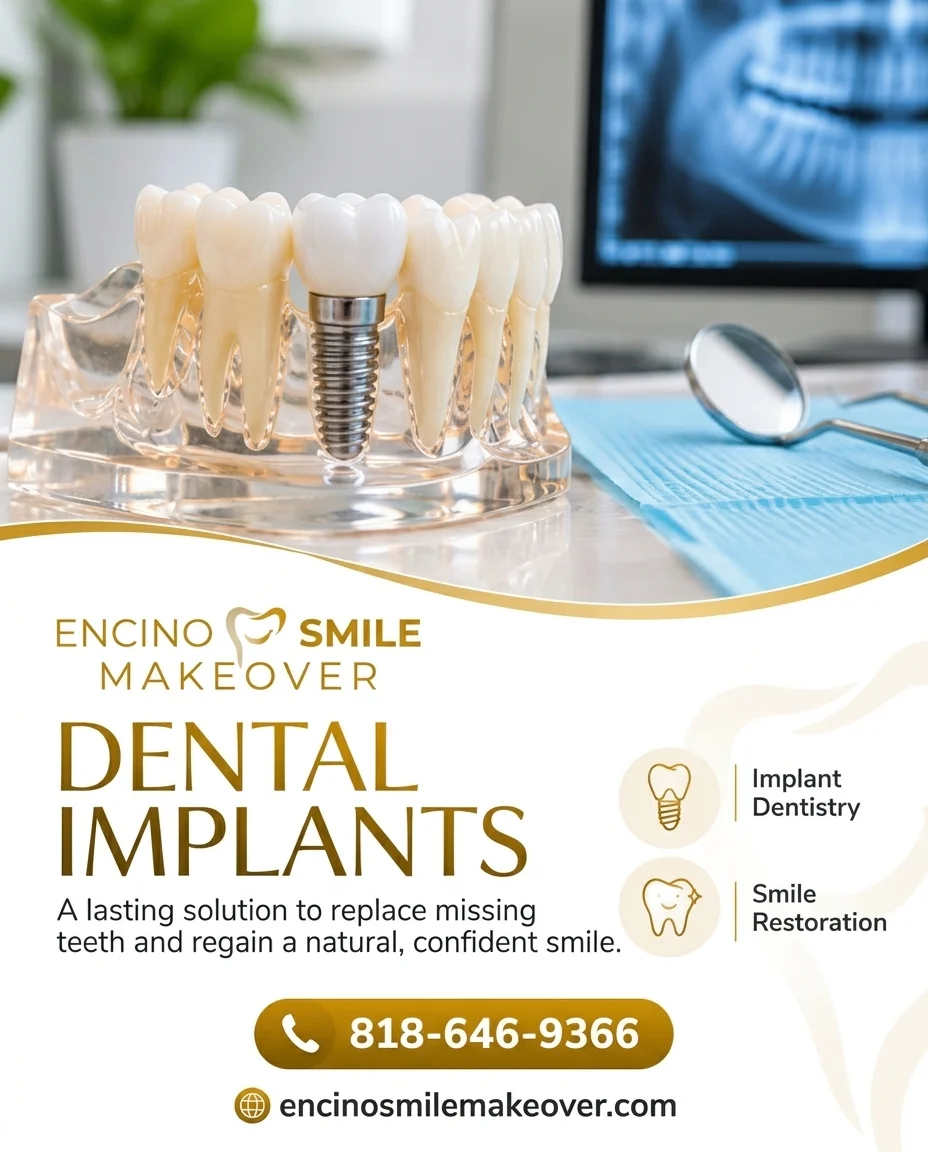
This is the core difference. A dental implant is a small titanium post placed in the jawbone. Over a few months, bone typically bonds to it, and a crown, bridge or full arch attaches on top. The result is fixed. You don’t take it out.
Traditional dentures work differently. A full denture sits on the gum ridge and stays put through suction, a close fit and sometimes adhesive. A partial denture clips onto your remaining natural teeth. Both are removable. That’s a real convenience for some people and a frustration for others. If you’ve ever worried about a plate shifting while you talk at dinner, this is the difference you’re feeling. Implant-supported dentures sit in the middle: removable or fixed arches that snap onto a few implants for extra hold.
2. What happens to your jawbone over time
Teeth roots do more than anchor teeth. They stimulate the bone around them when you chew. Once a tooth is gone, that stimulation stops and the bone in that area tends to shrink gradually. It’s a slow process. It also changes how a denture fits.
Dentures sit on top of the gums, so they don’t replace that root stimulation. As the ridge changes, dentures often need relining or remaking to keep a snug fit. Implants sit in the bone itself, which may help preserve the jaw in that area. If bone has already thinned, you may need grafting before an implant can be placed. Our guide to how bone loss develops after a tooth is lost explains why timing matters so much here.
3. Chewing, speaking and everyday confidence
Many denture wearers adapt well. Still, some foods take practice. Crunchy vegetables, tough meats, corn on the cob and sticky foods can be harder with a removable plate. Upper dentures also cover the palate, which some people say changes how food tastes and feels.
Implants are anchored, so biting tends to feel much closer to natural teeth. Patients often tell us they stopped thinking about their teeth during meals. Speech is another factor. A loose denture can click or slip on certain sounds, while a fixed restoration doesn’t move. That’s not to say dentures can’t work beautifully. A well-made, well-fitted denture can look natural and feel comfortable. It just relies on fit rather than fixation, and fit changes with time.
4. The treatment process and timeline
Dentures usually come together faster. After any needed extractions and healing, we take impressions, check bite and appearance, and adjust the final set. Many patients have functional teeth within weeks.
Implants take longer. The usual sequence is a consultation with digital X-rays, any extractions or grafting, placement of the implant post, a healing period while bone bonds to it, then the final crown or arch. Healing times vary from person to person. It’s a commitment of months, not weeks. Some people can wear a temporary tooth while they heal, which keeps the gap covered. If you want a clearer picture of each stage, our breakdown of the implant healing and recovery timeline walks through what most patients experience.
5. Daily care and long-term maintenance
Implants are cared for much like natural teeth. You brush twice a day, floss or use a water flosser around the abutment, and keep up with professional cleanings. The implant itself can’t decay. The gums around it can still become inflamed, though. So hygiene matters.
Dentures have their own routine. You remove them to clean them, soak them overnight in many cases, brush your gums and any remaining teeth, and handle them carefully to avoid drops and cracks. Over the years, dentures commonly need relines, repairs or replacement as your mouth changes and the material wears. Implant crowns can wear too and may eventually need replacing, but the post underneath is designed for long-term use when it’s well maintained. Neither option is maintenance-free. They just need different kinds of attention.
6. Why Encino patients often weigh this choice differently
Encino sits in the San Fernando Valley, and our patient mix reflects that. Many people here are established professionals and retirees who have lived in the area for decades, some with older dental work like bridges, large amalgam fillings or root canal teeth now reaching the end of their life. When several of those fail around the same time, the decision quickly becomes implants, dentures or a combination.
Lifestyle plays a role too. Valley life means lots of dining out along Ventura Boulevard, client lunches and social events where people want to eat and talk without worrying about a plate slipping. Others prioritize a faster, less involved path and are happy with a well-fitted denture. Our dry inland climate is also worth mentioning: denture wearers sometimes notice dry mouth affects suction and comfort, so we look at that during planning. There’s no single Encino answer. There’s your answer.
7. How cost compares over the long run
We won’t put numbers in an article, because every mouth is different. What we can explain is how cost works. Dentures usually have a lower upfront investment and a quicker start. Over many years, though, relines, adjustments and replacement sets add up.
Implants generally require a larger initial investment. The main drivers are how many implants you need, whether grafting or extractions come first, the type of restoration on top (single crown, bridge or full arch) and your current oral health. Because a well-maintained implant can last a long time, some patients see it as a long-term value decision rather than a short-term expense. When you compare quotes, ask what’s included: imaging, temporaries, the abutment and final restoration. To understand the full treatment, see our overview of Encino dental implants, and bring your questions to a consultation.
So which one is right for you?
Implants tend to suit people who want fixed, natural-feeling teeth and have healthy enough bone, or are willing to graft. Dentures tend to suit people who want a faster, less involved and more budget-conscious route, or who aren’t candidates for surgery. Implant-supported dentures combine parts of both.
We offer all of these at Encino Smile Makeover, including extractions, gum disease treatment and digital X-rays, so we can plan the whole process in one office. If you’d like to see your options side by side, book a tooth replacement consultation with our team and we’ll talk through what fits your mouth, your schedule and your goals. You can also read more about how implant treatment works at our Encino office.
Frequently Asked Questions
Can I switch from dentures to implants later?
Often, yes. Many denture wearers move to implants or implant-supported dentures, though bone loss over time may mean grafting is needed first, so an evaluation is the best starting point.
Are dental implants painful?
Placement is done with local anesthesia, and most patients describe soreness afterward that’s manageable. Everyone heals differently, and we’ll go over what to expect for your case.
Do I need to replace every missing tooth with an implant?
Not necessarily. A few implants can support a full arch or an implant-supported denture, and some patients combine a partial denture with implants elsewhere.
The bottom line
Dentures rest on your gums. Implants become part of your jaw. Both can restore your smile, and the best fit depends on your bone, your budget and how you live in Encino. Come see us and we’ll help you weigh it honestly.
[…] of patients. They just solve a different problem. If you’re comparing paths, our breakdown of how implants and dentures compare for Encino patients walks through the trade-offs side by […]
[…] can mean a graft and a longer total timeline. If you’re comparing options, our breakdown of implants versus dentures for Valley patients lays out how recovery differs between the […]